Research Focus
Translational and Genomic Approaches to Cancer Therapy
Our laboratory is dedicated to unraveling the molecular complexities of cancer to develop more effective therapeutic strategies. By integrating the power of functional genomics with the precision of chemical biology, we aim to dissect the fundamental mechanisms of cancer progression, identify novel therapeutic targets, and overcome the challenge of drug resistance. Our comprehensive approach spans from the intricate regulation of protein synthesis to the large-scale analysis of cancer genomes, all with the ultimate goal of translating our discoveries into clinical benefits for patients.
Overcoming Drug Resistance in Cancer
A primary challenge in oncology is the development of drug resistance. Our research confronts this problem by systematically identifying the genes and signaling networks that allow cancer cells to evade treatment. We utilize cutting-edge, unbiased functional genetic screens, which have proven powerful in uncovering novel genes and network interactions that modulate responses to cancer therapeutics (PMID: 24657533). Our work focuses on resistance mechanisms to a range of treatments, including inhibitors of receptor tyrosine kinases (RTKs), the MAPK pathway, and cyclin-dependent kinases (CDK) 4/6 in cancers such as non-small cell lung cancer (NSCLC), melanoma, and breast cancer (PMID: 27598681; 27030077).
Our previous work has successfully identified strategies to counteract resistance, with some of our findings contributing to FDA-approved therapeutic regimens. We are also actively investigating the tumor-intrinsic function and regulation of the immune checkpoint protein PD-L1 (PMID: 26598942), seeking to enhance the efficacy of immunotherapies. By precisely defining these escape routes, we aim to develop novel combination therapies that can prevent or reverse resistance. This multi-pronged approach is committed to creating more durable and personalized treatment strategies, ultimately improving patient outcomes.
Targeting Genetic Vulnerabilities in Cancer
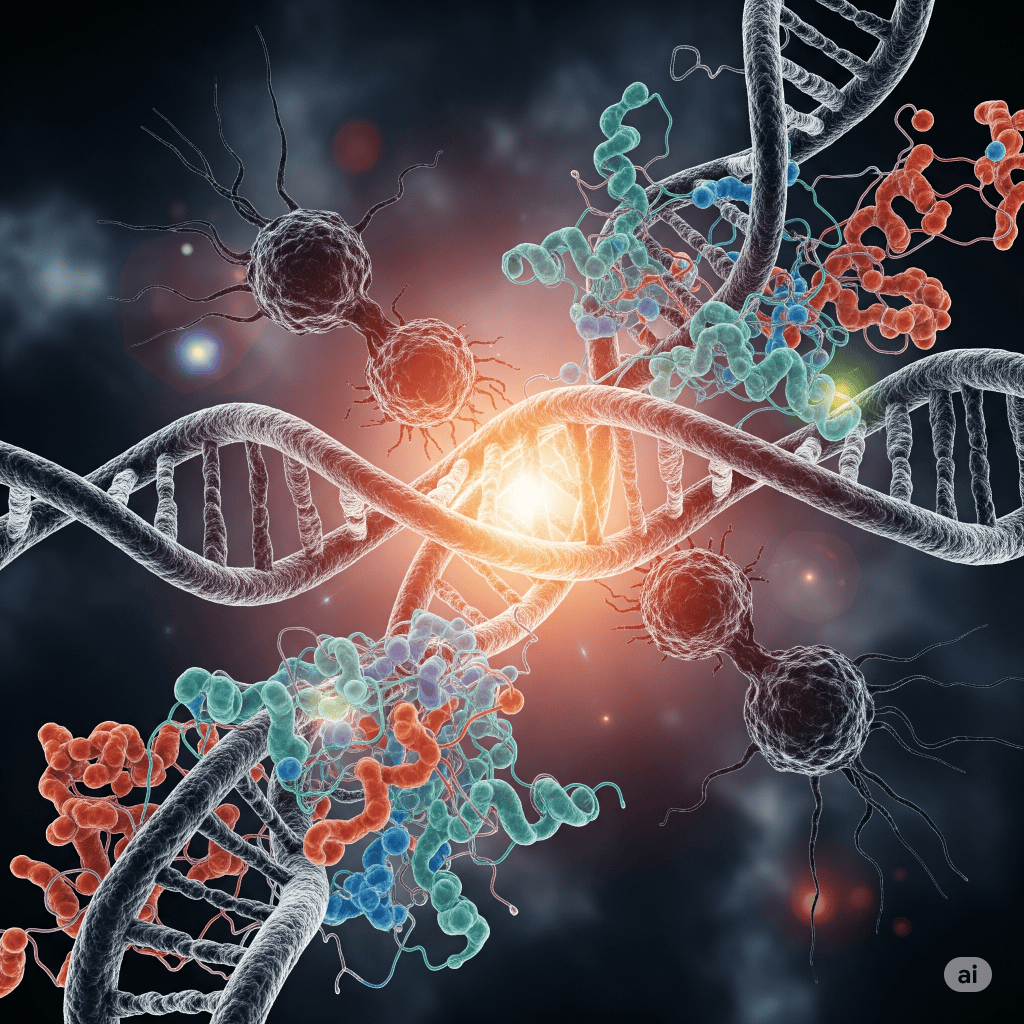
Many cancers are driven by specific genetic alterations, including mutations that are difficult to target directly, such as the loss of tumor suppressor genes. Our research employs the principle of “synthetic lethality” to identify alternative druggable targets that are essential for the survival of cancer cells with these hard-to-treat mutations.
A significant focus of our work is on cancers driven by the inactivation of the SWI/SNF chromatin remodeling complex, which is known to cause cancers (PMID: 21654818; 26601204). Deleterious mutations in the key SWI/SNF component SMARCA4, for example, underlie the rare but often lethal small cell carcinoma of the ovary, hypercalcemic type (SCCOHT) (PMID: 24658001; 24658002; 24658004). Similarly, aggressive atypical teratoid/rhabdoid tumors (AT/RTs) are attributable to inactivating mutations in another SWI/SNF member, SMARCB1 (PMID: 9671307; 9892189). SMARCA4 is also frequently inactivated in more common cancers like NSCLC (PMID: 12566296; 21280140; 25079552).
We recently uncovered that the loss of SMARCA4 in these cancers leads to cyclin D1 deficiency, creating a dependency on CDK4/6 (PMID: 30718506, 30718512). This vulnerability is now being explored in clinical trials with FDA-approved CDK4/6 inhibitors. We continue to use druggable gene-family CRISPR/shRNA libraries and compound collections to discover new therapeutic targets in these and other SWI/SNF-deficient cancers.
The Chemical Biology of Protein Synthesis
Underpinning many of the altered cellular processes in cancer is the fundamental machinery of protein synthesis. Our lab utilizes chemical biology to dissect the intricate steps of translation, with a particular emphasis on translation initiation. We have identified and characterized unique natural products that selectively inhibit this process, such as the family of rocaglate compounds which induce gain-of-function alterations to the translation factor eIF4A (PMID: 32075730). A core part of our research is dedicated to understanding their precise molecular mechanisms of action through high-throughput screens and functional assays (PMID: 14769948).
By elucidating the organizing principles of how ribosomes are recruited to messenger RNAs (mRNAs) (PMID: 31220979), we aim to develop methods to synthetically control the translational output from specific mRNAs. This research is enhanced by the use of single-molecule imaging, allowing us to visualize the dynamics of translation in living cells and gain unprecedented insights into this essential cellular process.
Innovative Tools for Discovery: CRISPR and Beyond
Our research is driven by the application and development of state-of-the-art technologies. We leverage the power of CRISPR/Cas9 gene-editing tools for sophisticated genetic screens to probe the complexities of translational control in both normal and cancerous cells. Furthermore, we are repurposing this technology for in situ functional assays and to gain a deeper understanding of the critical interactions between RNA and proteins that govern gene expression (PMID: 24220163).
By combining these innovative tools with our deep expertise in cancer genomics and translational biology, we are poised to continue making significant contributions to the understanding and treatment of cancer.
Our sincere appreciation to our funding support